A spinal fracture with osteoporosis: treating pain and preventing the next fracture
A vertebra can fracture after a minor fall or even an ordinary movement when bone is fragile. The pain may be sudden and severe, and it is understandable to worry that the spine has become unsafe. The first task is to identify what has fractured and whether there is any pressure on the nerves. The next is to help you regain movement and reduce the risk of another fracture.
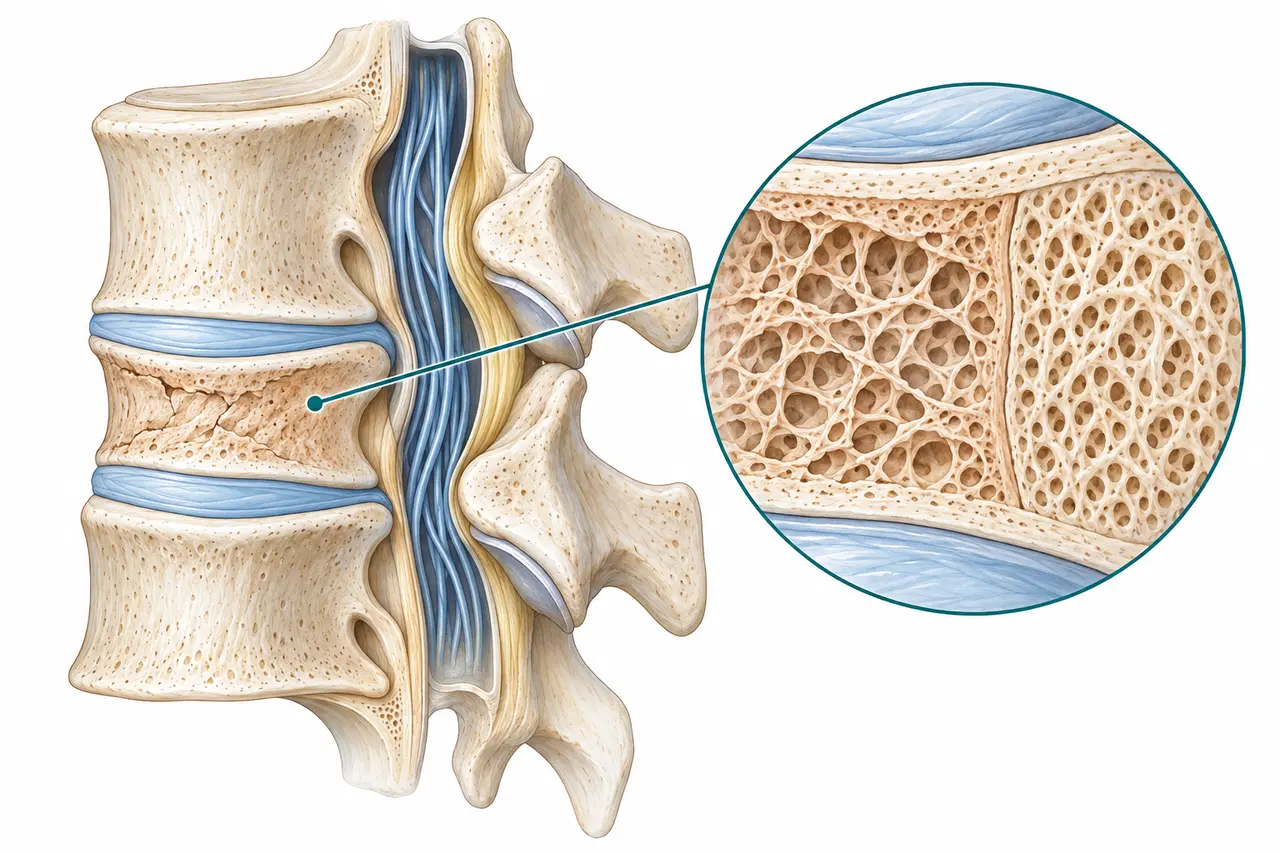
A vertebral compression fracture and an enlarged conceptual view of fragile bone. The image does not determine treatment.In this article
How do I know the fracture is causing my pain?
A recent vertebral fracture often causes pain in one area of the back that worsens with movement. An X-ray or CT can show a change in the vertebra's shape; MRI may help distinguish a recent painful fracture from an older one or investigate nerve symptoms or another cause. Not every compressed vertebra seen on a scan is the source of today's pain.
Unexplained weight loss, a history of cancer or infection, or an unusual fracture appearance may require further investigation. Osteoporosis is common, but should not be assumed without considering the whole picture.
Will it heal without an operation?
Many fractures can be managed without surgery. Pain relief should make it possible to move safely, rather than leave you in bed for prolonged periods. Advice about movement, rehabilitation and, for selected patients, a brace can help during recovery. A brace may ease symptoms for some people, but evidence does not support routine use for every fracture or show that it speeds bone healing.
I review the plan if pain remains severe, posture worsens or walking becomes harder. New leg weakness needs prompt assessment.
Is cement injection or kyphoplasty the answer?
Vertebroplasty and kyphoplasty place bone cement into a fractured vertebra, with a balloon step in kyphoplasty. They do not treat osteoporosis. The evidence for routine use is mixed, and important guidelines differ in how narrowly they recommend these procedures. They may be discussed in selected patients with a recent, unhealed fracture and severe pain that clearly matches the fracture despite appropriate treatment. A procedure should not be recommended merely because a scan shows a collapsed vertebra.
The potential benefit must be weighed against cement leakage, infection, persistent pain and the possibility that another source of pain has been missed. Marked instability, progressive deformity or neurological compromise may require a different kind of spinal assessment and, occasionally, stabilisation.
Why discuss bone health now?
A vertebral fracture is a warning about future fractures. Bone-density testing and an assessment of fracture risk, falls, medication and possible causes of weak bone help guide prevention. Hip DXA is useful, while degenerative changes or vascular calcification can make a lumbar spine DXA result look falsely reassuring; it does not directly measure the strength of the fractured vertebral body. Osteoporosis treatment should begin promptly after assessment, and bone-building medication may be considered first for those at very high fracture risk. Suitable exercise, balance work and fall prevention matter even if the original fracture settles. Cement or spinal fixation does not replace this work.
I would treat the painful fracture and the fragile bone as connected problems. The right plan should help you move again, explain honestly when a procedure may help, and reduce the chance that you return with another fracture.