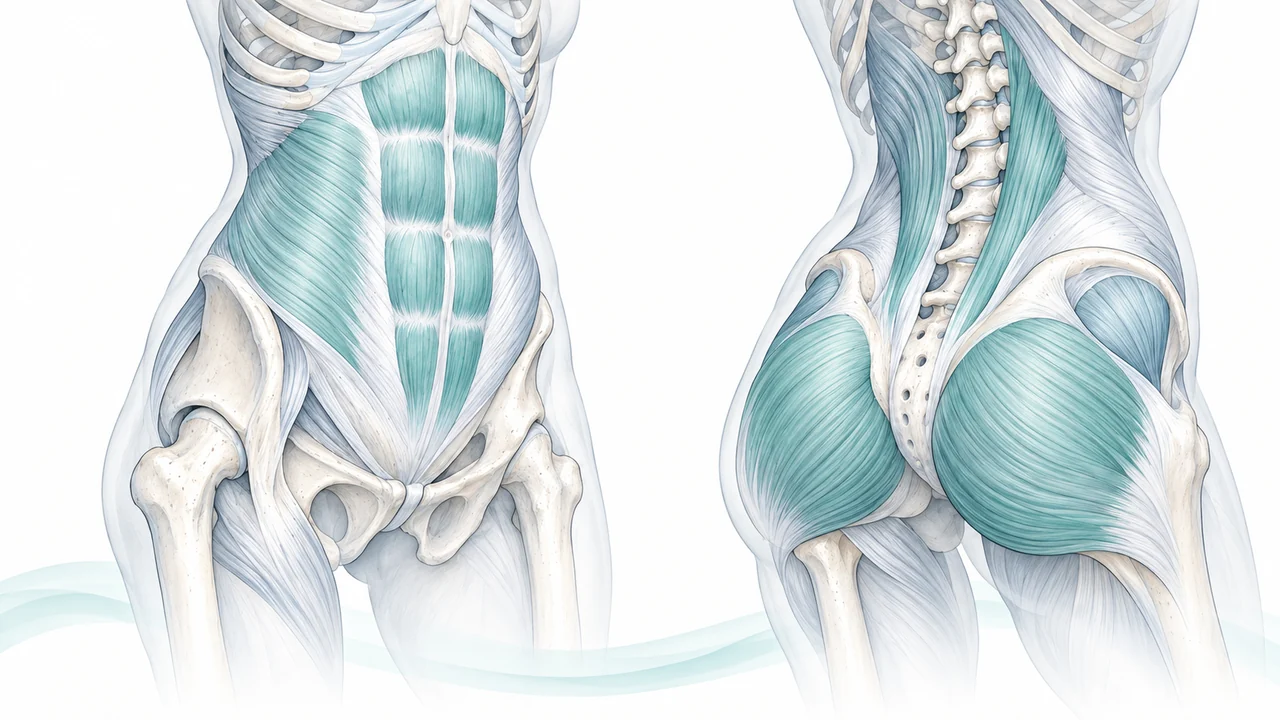
The abdominal, back and gluteal muscles work together to support movement of the trunk, pelvis and hips.In this article
“Should I strengthen my back?” is a common question. Back muscles matter, but they are only part of the picture. Your abdominal muscles, back muscles and gluteal muscles work together to support movement of the trunk, pelvis and hips.
I assess how your spine, pelvis and hips work together, identify what is limiting you and build treatment around it. My goal is to relieve your pain, restore confident movement and get you back to your life.
What does non-surgical treatment involve?
Non-surgical, or conservative, treatment is an active treatment plan. I select the combination of advice, progressive exercise, activity changes and medication that fits your diagnosis. Physiotherapy turns that plan into practical skills and exercises you can continue independently.
This article focuses on common low back pain. I establish the diagnosis first, then select the treatment and exercises that address it.
Why strengthening the back alone can miss the point
Your trunk and hips function as a coordinated system:
Abdominal muscles contribute to control of the trunk and pelvis.
Back muscles help support and move the spine.
Gluteal muscles provide hip strength and help control the pelvis during walking, stairs and lifting.
Effective training addresses the weaknesses identified on examination. When abdominal control and gluteal strength are lacking, they deserve focused attention alongside the back muscles. I use these findings to guide a balanced programme of strength, endurance and movement control.
“Core training” also does not mean constantly tightening your stomach or holding your back stiff. The goal is to coordinate muscle activity while moving and breathing normally.
Can exercise help pelvic tilt?
The pelvis connects the spine to the hips. Abdominal and gluteal training helps develop control of this region during standing, walking, bending and lifting. When examination identifies poor coordination between the lower back, pelvis and hips, targeted training addresses it.
For example, you may benefit from learning to extend the hip without repeatedly arching the lower back. Strengthening and practising the movement can improve control; repeatedly forcing the pelvis into one position is a different matter.
The target is useful control and comfortable movement. Pelvic position varies between people and can also compensate for a structural spinal problem. I distinguish that compensation from a movement problem before deciding what exercise should achieve.
What should a useful physiotherapy programme include?
I begin with a clear assessment and practical goals: walking farther, sitting through a meeting, climbing stairs or returning to training.
Your programme brings together the elements you need: trunk and hip strengthening, movement practice, mobility work and aerobic activity such as walking or cycling. Exercises progress as your capacity improves. You should know what each exercise is for and how to continue at home.
Massage or other hands-on treatment may help with symptoms, but should support an active programme. Temporary relief after a session is useful; lasting progress also requires a plan for activity between sessions.
Should I exercise if it hurts?
You do not always need to be completely pain-free before moving. Begin at a manageable level and build gradually. Mild, short-lived discomfort may be acceptable within your agreed programme.
If an exercise repeatedly causes a substantial flare, reduce its intensity or change it with your therapist. New weakness or clearly worsening leg symptoms needs assessment, rather than simply more exercise.
Regular, manageable practice is usually easier to sustain than occasional exhausting sessions.
How will I know treatment is working?
Look beyond the pain score. Can you walk longer, manage more daily tasks, sleep better or return to activities with less fear? Review these goals and adjust the programme if progress stalls.
If treatment is not helping, I reassess the diagnosis, exercise selection and training load. I adjust the plan and discuss further options when symptoms continue to limit your life. Treatment needs a direction and a measurable purpose.
I build treatment around a clear diagnosis and your goals: relieving pain, developing strength and restoring confidence in movement.