A fracture after an accident: how is the spine assessed?
Hearing that a vertebra is broken can be frightening. A scan may show a dramatic fracture, but it does not answer the whole question. The immediate priorities are other injuries, the function of the spinal cord and nerves, and whether the spine will remain stable as you move and heal.
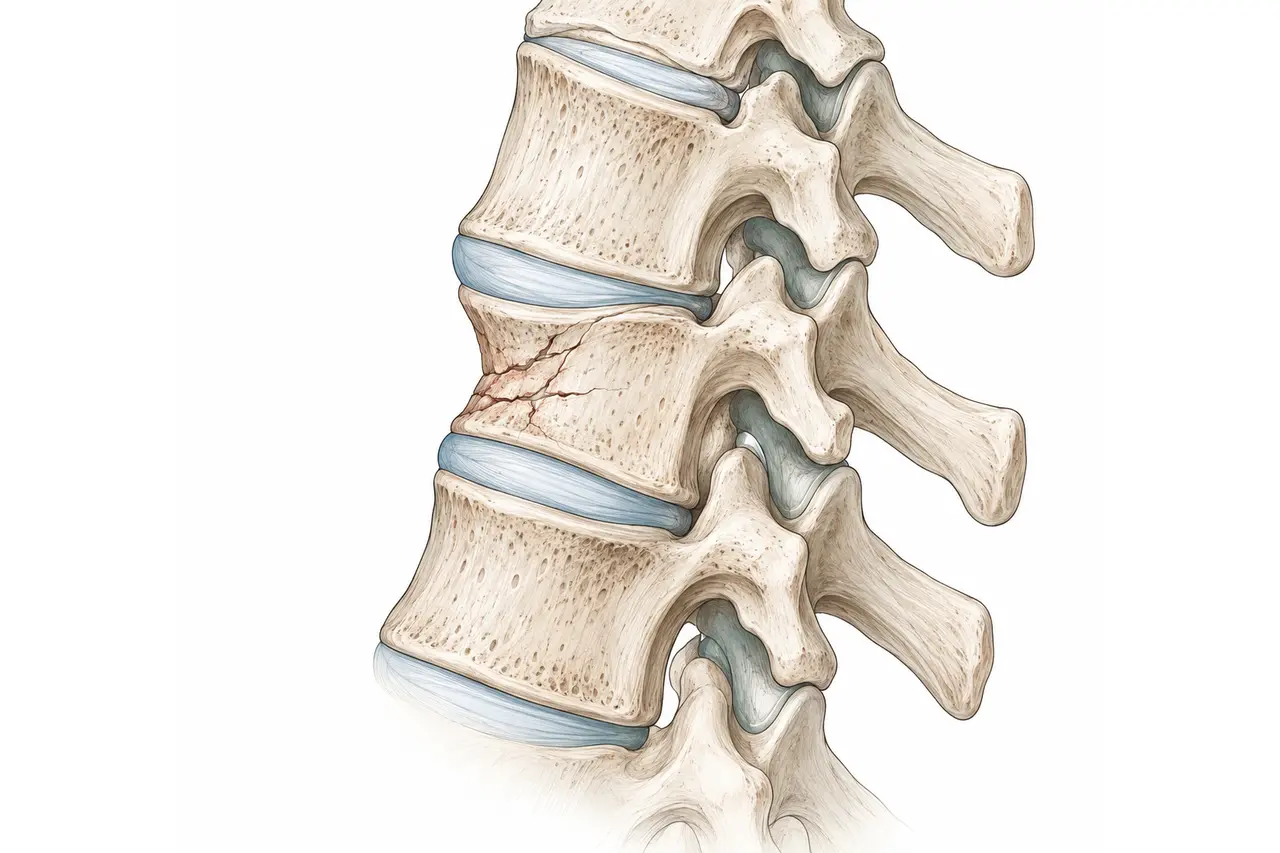
Anterior loss of vertebral height creates a focal kyphotic bend. This drawing is illustrative; fracture pattern and stability require individual assessment.In this article
What happens first?
After a significant fall, collision or other trauma, assessment takes place in an emergency service. The team checks breathing, circulation, associated injuries and neurological function. Follow the emergency team's guidance about movement until spinal stability has been assessed.
Does every spinal fracture require surgery?
Fractures differ in pattern and severity. Stable fractures can often be treated with pain control, guided mobilisation and follow-up. I select a brace when it serves a specific purpose in the recovery plan.
Other injuries damage the structures that hold the spine together, allow the bones to move out of alignment, or threaten the cord or nerves. These may require stabilisation, decompression or both. Even a fracture described as a “burst” fracture does not, by itself, decide between an operation and non-operative care.
What do the scans tell us?
CT defines the broken bone and its position. MRI may be needed to assess the spinal cord, nerves, discs or ligaments when the examination or fracture pattern raises concern. Images need to be read alongside the neurological examination and the rest of the patient's injuries. In selected cases, later standing films help check alignment once mobilisation is considered safe.
If surgery is advised, what is it meant to achieve?
The surgical goals are to protect or relieve the nerves, restore alignment and provide stability for safe movement. Compression can reduce the front height of a vertebra and create a forward bend. I assess this deformity and overall spinal balance, then plan any correction and fixation. The injury pattern and surrounding spine determine the levels that need support and whether fusion is required.
I plan the timing and extent of surgery around the spinal injury, other injuries and your general condition. I assess the severity of nerve damage and explain the neurological recovery we can reasonably expect.
What should I ask after the emergency phase?
Ask whether the injury is stable, whether the nerves are affected, what changes would make surgery necessary, and how the team will check that the chosen treatment is working. Follow-up matters with either route: pain, alignment and neurological function can change during recovery.
My decision is built around the injury in front of me, not the label attached to a scan. The aim is a stable, functional recovery with the least treatment that safely addresses the fracture and its neurological risks.