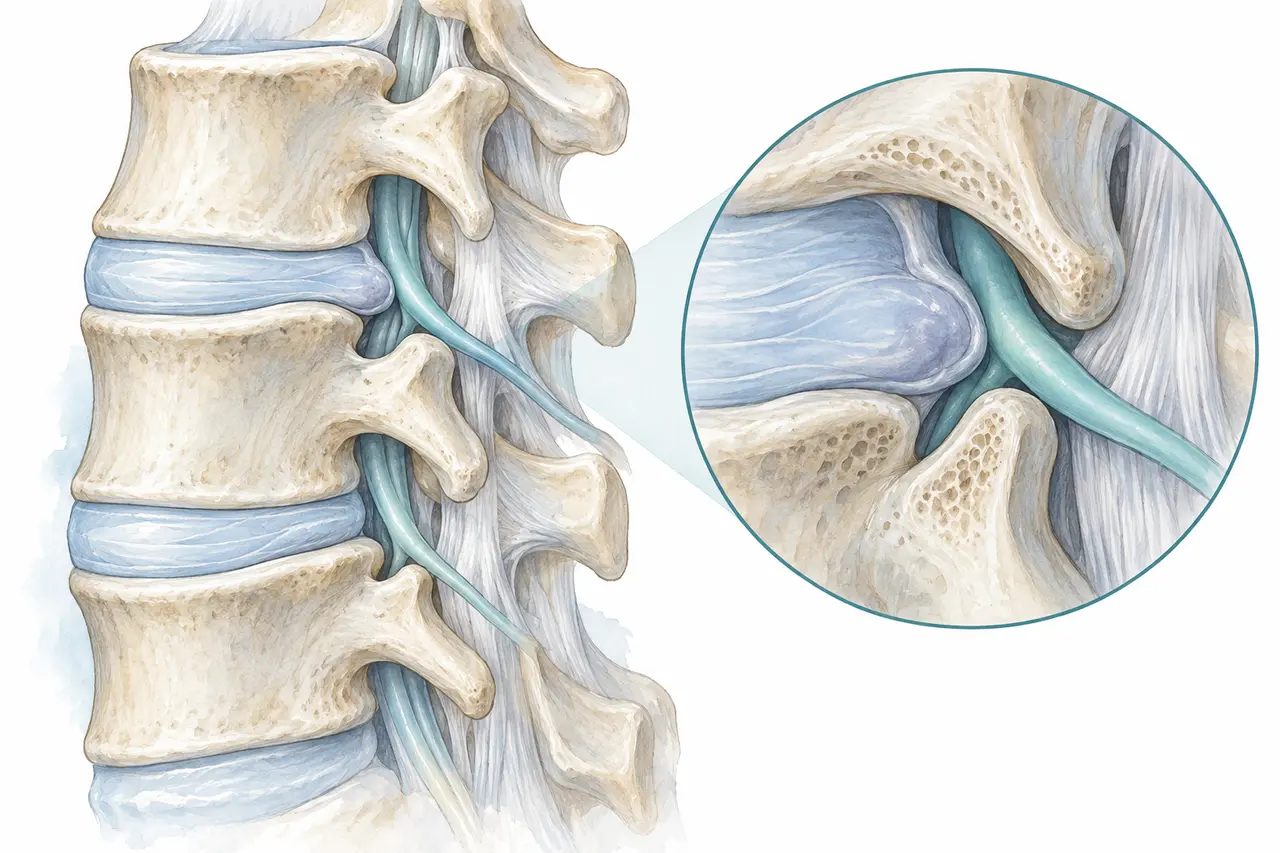
An operation needs a clear target. A disc change near a nerve matters when it fits the symptoms and examination.In this article
Before recommending spine surgery, I establish what is causing your symptoms and what the operation should achieve. We discuss the options, the expected benefit and the timing so you can make a clear, informed decision.
Is there a problem the operation can address?
The symptoms, examination and imaging should support a clear explanation. Depending on the condition, surgery may relieve nerve pressure, stabilise an unstable segment or correct a deformity. An abnormal scan alone is not a sufficient reason to operate.
Pain intensity matters, but it is only one part of the decision. Walking, strength, hand function, sleep and daily activities help define the problem and a realistic treatment goal.
Have appropriate alternatives been considered?
For many degenerative conditions, non-operative care is a reasonable starting point. This may include adapted activity, exercise or physiotherapy, and medication or a targeted intervention when appropriate.
Persistent symptoms despite treatment can strengthen the case for surgery, but “everything else has failed” is not enough. There still needs to be a problem that the proposed operation can plausibly improve. Conversely, a prolonged conservative trial may be inappropriate when neurological function is deteriorating.
What could happen if I wait?
Ask whether the condition is stable, likely to improve or at risk of progression. Some decisions are mainly about quality of life. Others concern worsening weakness, spinal cord function, an unstable injury or another condition where delay may matter.
There should be a follow-up plan and a clear explanation of which changes should prompt earlier assessment. “Wait and see” is most useful when you know what you are watching for.
What benefit is worth the risk?
Specify the aim: walking farther, relieving radiating pain, protecting neurological function or improving spinal balance. Ask which symptoms may persist and how recovery will affect your daily life.
The risks depend on the operation and your health. They may include infection, bleeding, nerve injury, persistent symptoms and further surgery. A smaller operation is worthwhile when it can adequately achieve the objective; an unnecessarily limited operation can also leave the problem unresolved.
What does the success percentage mean for me?
Successful surgery begins with a diagnosis that explains your symptoms, an operation that addresses the cause and precise surgical execution. I assess these together before recommending treatment.
I connect your symptoms with the examination and imaging, then select the operation and plan its technical details. I also account for your health, nerve recovery, bone healing and rehabilitation when discussing the expected result.
When you ask about success, I first define the goal with you: relief of leg pain, better walking, improved balance or protection of nerve function. These are different outcomes. When I quote a percentage, I explain what was measured, over what period and how closely the patients studied resemble you.
My responsibility is to give you a relevant estimate, explain what I expect to improve and perform the chosen operation with the expertise and precision it requires.
I recommend surgery when its objective is clear and its expected benefit justifies the burden and risk. You should leave the discussion understanding why this operation is being considered, why now, and what other choices remain.