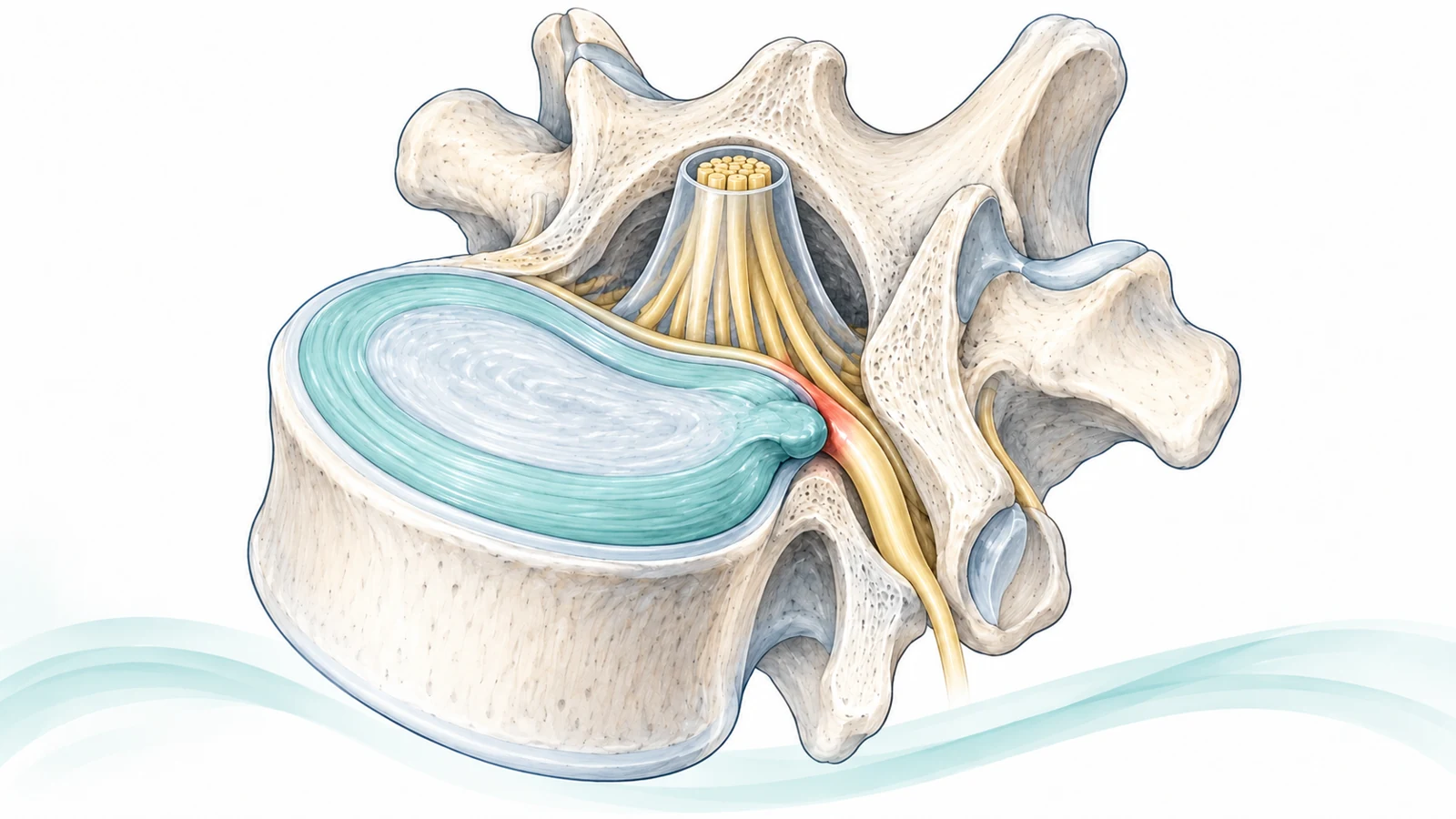
A disc herniation can irritate or compress a nearby nerve root. Treatment follows your symptoms and examination.In this article
Leg pain can take over your day: sitting becomes difficult, sleep is interrupted and every step brings a reminder of the problem. My first task is to establish whether a lumbar disc herniation explains your symptoms, then decide how best to relieve the pain and protect nerve function.
What is a disc herniation?
A disc sits between two vertebrae. When part of its softer centre pushes through the outer layer, it can irritate or compress a nearby nerve root. This can produce pain travelling down the leg, tingling, numbness or weakness.
Pain and weakness are different findings. I examine muscle strength, sensation and reflexes, then match them with the MRI. The scan supports the diagnosis; the size of a herniation alone does not decide treatment.
Can I recover without an operation?
Many patients improve without surgery. When nerve function is stable and symptoms are improving, I use an active plan: appropriate pain treatment, manageable daily movement and physiotherapy directed at your needs. A targeted injection is an option for selected patients.
You should know what improvement we expect and when we will review it. Continuing treatment makes sense when it is helping you recover function. Persistent disabling symptoms deserve a fresh decision.
When do I recommend surgery?
I recommend surgery when a herniation clearly explains persistent, disabling leg symptoms and appropriate non-surgical treatment has not provided enough relief. Significant or progressive weakness can justify earlier surgery. New bladder or bowel dysfunction needs emergency assessment.
The decision brings together the examination, imaging, severity of symptoms and effect on your life. I explain the expected benefit, the alternatives and the risks—including infection, a tear in the nerve covering, nerve injury and recurrent herniation—before we agree the plan.
What do I do during the operation?
I remove the disc fragment pressing on the nerve and create the space it needs. I use microscopic or endoscopic techniques according to the fragment's position, the anatomy and the access required. The approach must allow precise decompression and safe surgical execution.
A straightforward discectomy usually does not require fusion. A separate problem such as instability requires its own assessment.
What improvement should I expect?
The main target is the leg pain caused by nerve compression. Numbness and weakness can recover more slowly, and longstanding nerve dysfunction may not recover completely. Back pain needs its own assessment because it does not always share the same cause.
After surgery, I guide a gradual return to walking, daily activities and training. The plan reflects the operation and how your nerve function and movement are recovering.
How do we judge success?
I judge the result by relief of the leg pain caused by the herniation, recovery of function and your return to daily activity. I assess pain, strength and sensation separately when discussing the expected result. Any percentage I quote must refer to that particular outcome and follow-up period.
My goal is a clear decision and effective treatment: relieve the pressure when surgery is needed, protect nerve function and help you return to your life.