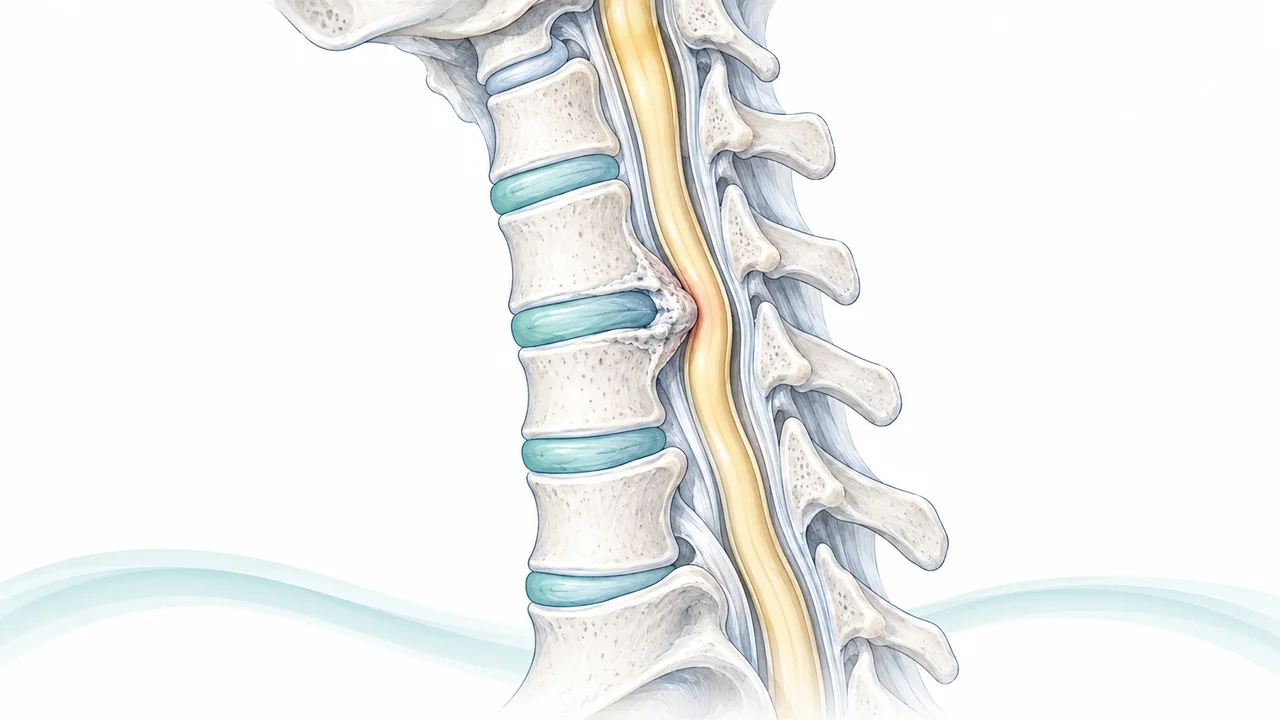
Compression of the spinal cord in the neck can affect hand coordination, walking and balance.In this article
Dropping objects, struggling with buttons or feeling unsteady on your feet can seem unrelated to the neck. These changes deserve attention. I assess whether pressure on the cervical spinal cord is affecting the signals between your brain and the rest of your body.
What is cervical myelopathy?
Myelopathy means impaired spinal cord function. In the neck, narrowing caused by discs, bone spurs or thickened ligaments can compress the cord. This differs from pressure on a single nerve root: the effects can involve both the hands and the legs.
The key issue is how the spinal cord is functioning. The amount of neck pain alone does not tell us how important the problem is.
Which changes should I take seriously?
Notice changes in handwriting, handling coins, fastening buttons or holding small objects. Other important symptoms include numb hands, stiff or heavy legs, reduced balance and an increasingly uncertain walk.
Tell me what has changed, when it began and whether it is progressing. Everyday examples help me understand the functional impact. Rapid deterioration in strength or walking needs urgent assessment.
How do I establish the diagnosis?
I examine hand function, strength, sensation, reflexes, walking and balance, then review the MRI for cord compression. Additional imaging helps clarify bone anatomy or alignment when needed for planning.
Compression on an MRI and clinical myelopathy are not the same finding. I connect the images with the examination before recommending treatment.
When is surgery the right treatment?
I recommend surgery for moderate or severe degenerative cervical myelopathy. Progressive loss of function makes timely treatment particularly important. In mild, stable disease, I discuss surgery or a closely monitored rehabilitation pathway, with clear reasons to change the plan.
When surgery is indicated, I decompress the spinal cord and address stability or alignment as required. I select the operation according to the location of pressure, the number of involved levels and the shape of your cervical spine. Options include surgery from the front or back of the neck, with fusion or selected motion-preserving procedures.
What is the aim of the operation?
The central aim is to protect spinal cord function and prevent further neurological deterioration. Many patients also regain function after decompression. Recovery depends on the severity and duration of cord dysfunction, and some changes remain.
I explain what we are trying to preserve, what improvement is realistic and how the operation's risks—including nerve or cord injury, infection and approach-specific complications—apply to your plan.
Can physiotherapy remove the pressure?
Physiotherapy supports movement and conditioning; it does not remove structural compression from the spinal cord. A monitored non-surgical plan needs follow-up of neurological function. Forceful neck manipulation should be avoided in spinal cord compression.
What does success mean in myelopathy?
Success includes protecting spinal cord function from further deterioration. I discuss recovery of hand function, walking and balance separately from pain relief, and explain how the severity and duration of cord dysfunction affect the estimate. A pain-relief percentage alone does not describe the purpose of this operation.
My priority is to recognise the problem, protect your spinal cord and act at the right time with a carefully planned operation when needed.